
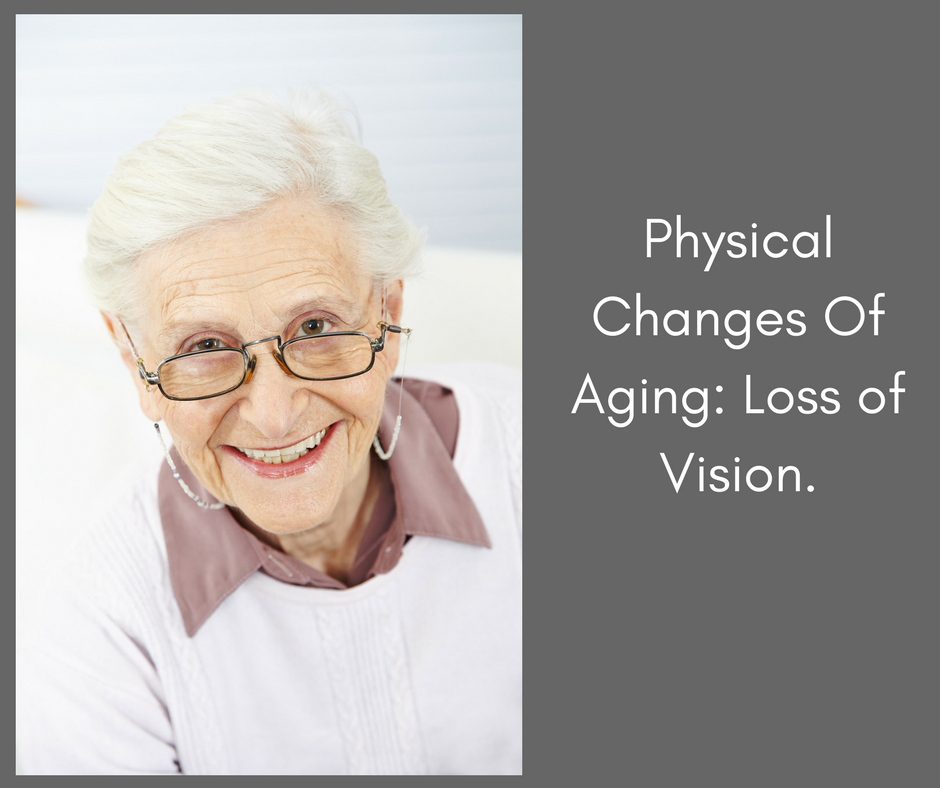
Physical Changes Of Aging: Vision Loss
According to a write-up from the American Foundation for the Blind, 6.5 million Americans over the age of 65 have a severe visual impairment. Vision loss can greatly affect the well-being of older adults in many ways.
A lot of visually impaired seniors experience difficulty performing the activities of daily living (ADL) such as: financial management, cooking, shopping, reading, showering, recreational activities, participating in social activities, and all other personal needs. And once these difficulties are noticed, it sometimes leads to depression. Some common vision-reducing eye problems include:
- Glaucoma
- Cataracts
- Diabetes
- Dry eye
- Age-related macular degeneration
One of the ways to avoid loss of vision is early preventive care. The earlier it’s detected, the better the chances of avoiding loss of vision.
- Going for regular vision appointments at least every two years
- Keeping a healthy diet
- Exercising more frequently
- Physical exams to check for diabetes and high blood pressure
- No smoking
And if seniors are already experiencing some loss of vision, here are some tips that can make a difference around their homes:
- Installing proper lighting around the home is helpful
- Using braille, audio tapes, and reading large font books
- Labeling important things around the home
- Removing clutter around the home
Finally, getting in touch with nonprofit organizations involved with seniors affected by the loss of vision can greatly help. Examples of such organizations are: Pennsylvania Association for the blind (www.pablind.org) , American Foundation for the blind (www.afb.org).

